
01
Smaller, flexible distribution
Two-inch flexible tubing follows existing walls, ceilings, floors and structural cavities. Small 5-inch round outlets blend into the ceiling far less intrusively than traditional 6×12 registers.
Loading
Preparing the page.
Residential High-Velocity HVAC Installation | Greater Boston
We have a two-family in Cambridge. The second unit, second and third floors needed AC. We faced a choice: tear the home apart for traditional ductwork and soffits or find a better solution. We chose Unico high-velocity. The system runs efficiently. No dry spots. No home damage. I'm not just the owner of 617 HVAC, I was solving my own problem. High-velocity became the solution.
High-velocity delivers central comfort through existing cavities without sacrificing ceiling height, walls or living space.
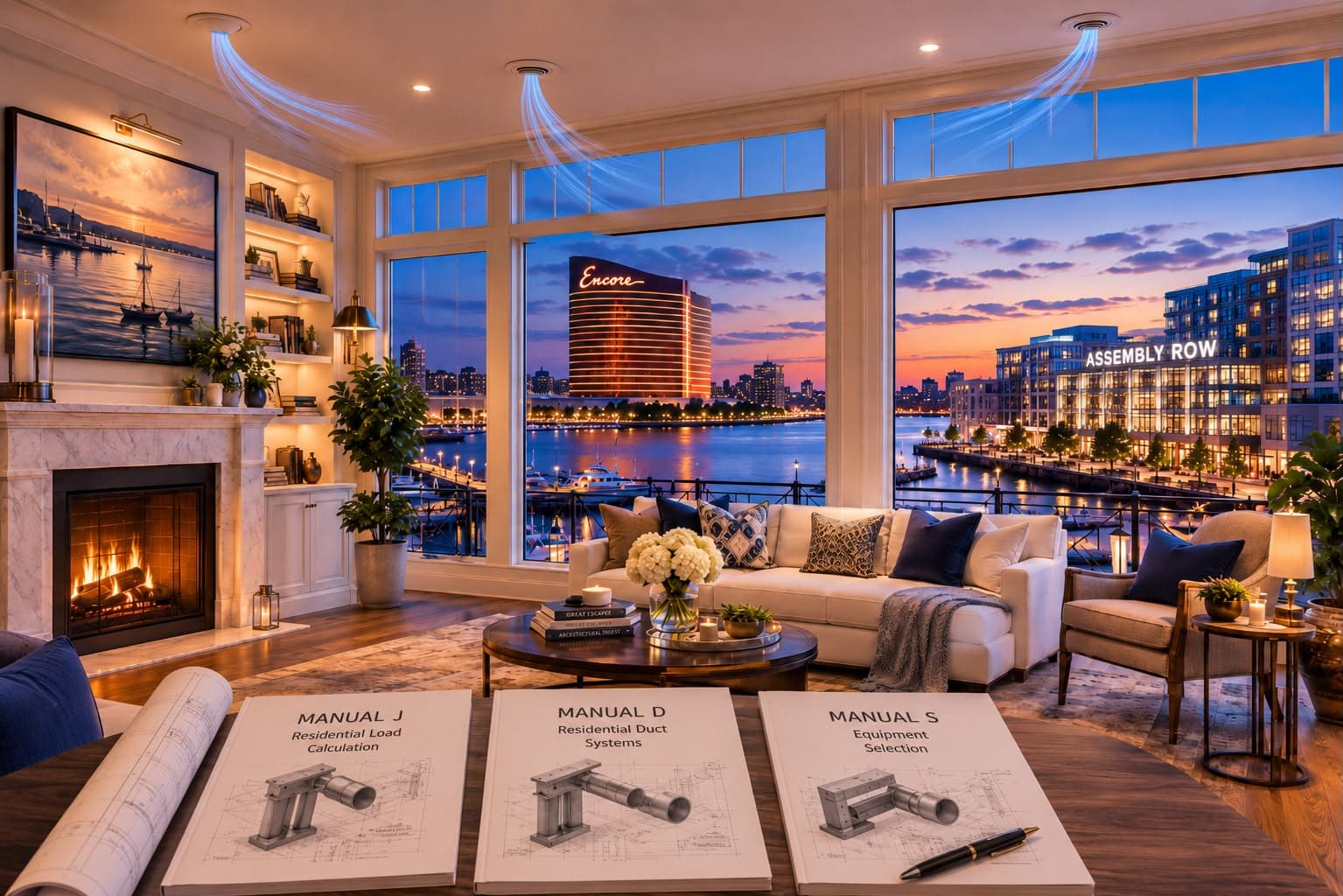
What High-Velocity Systems Are
Instead of 6–8 inch rigid ductwork requiring major renovation, high-velocity systems use 2-inch flexible tubing that snakes through existing walls, ceilings and floors. No soffits. No wall demolition. No sacrifice of living space. The real difference isn't just smaller ducts, it's how the system works. High-velocity air moves at 1,500–2,000 feet per minute, twice the speed of traditional systems, creating an "aspiration effect" that pulls room air along continuously. Result: even temperatures throughout your home with no hot or cold spots.
01
Two-inch flexible tubing follows existing walls, ceilings, floors and structural cavities. Small 5-inch round outlets blend into the ceiling far less intrusively than traditional 6×12 registers.
02
Air moving at 1,500–2,000 feet per minute continuously mixes conditioned air with room air, producing even temperatures without hot, cold or stagnant spots.
03
In Boston's muggy summers, high-velocity systems remove up to 30% more humidity than conventional air conditioning. Better humidity control means comfort at higher thermostat settings and lower energy bills.
04
This is why high-velocity has become the standard for historic homes, older construction and any space where traditional ductwork will not fit without major disruption.
Why 617 HVAC
We understand the Boston housing stock. Historic homes, older properties, tight spaces-we've worked on hundreds. We know what works and what doesn't. I installed this system in my own Cambridge two-family. I'm not selling you equipment, I solved this problem for myself first. I live with a high-velocity system. I know what it's like to want central AC without tearing your home apart.
No soffits. No ceiling drops. No wall demolition. We route 2-inch flexible tubing through existing cavities and maintain the home's original character.
Accurate cavity dimensions mean clean routing and no surprises during installation. The design you see is the design you get.
No unlicensed subcontractors. The team that designs your system installs it. Consistency and accountability from start to finish.
The aspiration effect isn't magic-it's physics. Understanding why high-velocity eliminates hot and cold spots helps you appreciate the comfort you're getting.
Once design is approved, there are no hourly surprises during the work. The price you approve is the price you pay.
How It Works
Before any work begins, you know exactly what the installation costs. That price is based on home size, system complexity, tubing routes, zone coverage, air-handler access and required room outlets, then provided in writing.
01
Explain your situation, historic home, tight space and aesthetic concerns. We review your estimate request and tell you upfront what high-velocity can do.
02
We measure wall cavities, ceiling spaces, floor structure, room layout, insulation levels and electrical capacity, then trace potential 2-inch tubing routes through existing infrastructure. Most homes surprise us: routing is cleaner than expected because structural cavities already run where we need them.
03
We design for your layout and show exactly where tubing runs, where outlets sit and how the air handler fits in the attic or basement. We explain aspiration and humidity-control benefits with real numbers for your space.
04
You see the routing plan, outlet placement, aesthetic impact and complete design before work begins. The deposit locks the project timeline.
05
We conduct final measurements, confirm every routing path, coordinate electrical upgrades and verify nothing changed since the design walkthrough.
06
Installation typically takes 3–5 days. We route tubing, install the air handler, connect outlets, commission and test the system and send daily progress updates.
07
We explain controls, provide warranties, handle paperwork and return after 30 days to confirm balance and efficiency. We handle warranty claims and processing so you do not pay and wait for refunds.
Complete Transparency
Routing
Two-inch tubing paths through existing cavities.
Outlets
Five-inch round outlet locations shown before installation.
Equipment
Air-handler placement in an attic, basement or closet.
Complete design, routing, outlet placement, cost and timeline are reviewed before installation.
Considering Other Options?
High-velocity is one path. The assessment shows whether traditional central air, ductless equipment or high-velocity fits the home best.
01
For homes where full-size ductwork will not disrupt the space.
AC Installation →02
Single-zone or multi-zone wall-mounted ductless solutions.
Mini Split Installation →03
Protect a high-velocity system and keep it efficient for its 12–15+ year expected life.
View Wellness Standard →From the Field · Cambridge
A two-family property in Cambridge, second unit mid-renovation. The second and third floors needed central AC. The constraints were low existing ceilings, historic structure and an already-tight renovation schedule.
Traditional 6–8 inch ductwork required soffits and 6–8-inch ceiling drops in an already-low space. Wall-mounted mini splits compromised the interior aesthetic. Space was constrained, budget mattered and renovation quality was non-negotiable.
A Unico high-velocity system with 2-inch tubing through existing cavities, no new soffits, awkward chases, wall-mounted units or design compromise. The discreet attic air handler delivers winter heating and summer cooling through one integrated setup.
Central AC without compromising the renovation. Ceiling heights preserved. Aesthetics intact. Even temperatures floor to ceiling. We moved from wall units we did not want or soffits dropping ceilings to 68 inches to an elegant solution proven in our own property.
High-velocity installation pricing depends on home size, zone coverage, equipment access and tubing routing complexity. After the assessment, you receive the exact project price in writing before work begins.
Traditional systems use 6–8 inch rigid ductwork that requires renovation-soffits, ceiling drops, wall openings. High-velocity uses 2-inch flexible tubing that snakes through existing cavities. Traditional systems push air at 600–900 feet per minute; high-velocity pushes at 1,500–2,000 FPM, creating an aspiration effect that mixes room air with conditioned air continuously. Result: even temperatures, no hot or cold spots, superior comfort and better humidity removal.
No. The 2-inch tubing runs inside walls and ceilings. Outlets are small 5-inch round vents that sit nearly flush with your ceiling about the size of a CD. They blend into the ceiling plane. In a historic home or any space where aesthetics matter, this is a significant advantage over traditional 6×12 inch registers.
Minimal to none. The 2-inch flexible tubing fits through existing wall cavities, ceiling spaces and floor structures. Most homes don't require wall demolition, ceiling drops or soffit construction. This is why high-velocity is ideal for historic homes and older properties where you want to avoid major disruption.
High-velocity systems remove up to 30% more humidity than conventional air conditioning because the system circulates air constantly through every room-no stagnant corners where moisture accumulates. In Boston's muggy summers, this means you stay comfortable at higher thermostat settings, which directly lowers your energy bills.
No. The aspiration effect continuously mixes conditioned air with room air, ensuring even distribution throughout your home. Temperature variation is typically under 2°F floor to ceiling (vs. 5–10°F with traditional systems). No dry spots. No drafty areas. Just consistent, comfortable conditions.
A properly sized and maintained high-velocity system typically lasts 12–15+ years. Our Vitals Home Wellness plan is $100 per month and includes 3 measured maintenance visits per year, helping keep the system running efficiently throughout its lifespan. Regular maintenance catches small issues before they become expensive failures.
Both are excellent high-velocity systems. Unico typically offers more customization for multi-zone layouts and integrates well with existing HVAC when you're doing partial-home coverage. SpacePak is a strong option for smaller to medium homes with straightforward routing. We design with both brands and choose what fits your specific home and layout.
Most homeowners see 15–20% reduction in heating and cooling costs compared to traditional systems. This comes from superior ductwork efficiency and better humidity control. In a typical Boston home, that's $500–$1,000+ per year in savings.
Most high-velocity installations complete in 3–5 days. This is significantly faster than traditional ductwork installation because flexible tubing can follow existing structural cavities. Your written proposal includes the expected timeline for your specific project.
Swipe to explore
Your Boston home deserves central air without major renovation. High-velocity makes that possible-space-efficient, preservation-focused, genuinely efficient. Design walkthrough first. System routing shown on your floor plan. Written price before we start. No surprises.