
01
Recurring Dust
Dust that returns days after wiping often traces back to the duct system. A borescope inspection shows if the buildup lives inside the ductwork or somewhere else.
Loading
Preparing the page.
Residential Ductwork Video Inspection | Greater Boston
See inside your duct system. Decide from footage, not guesswork.
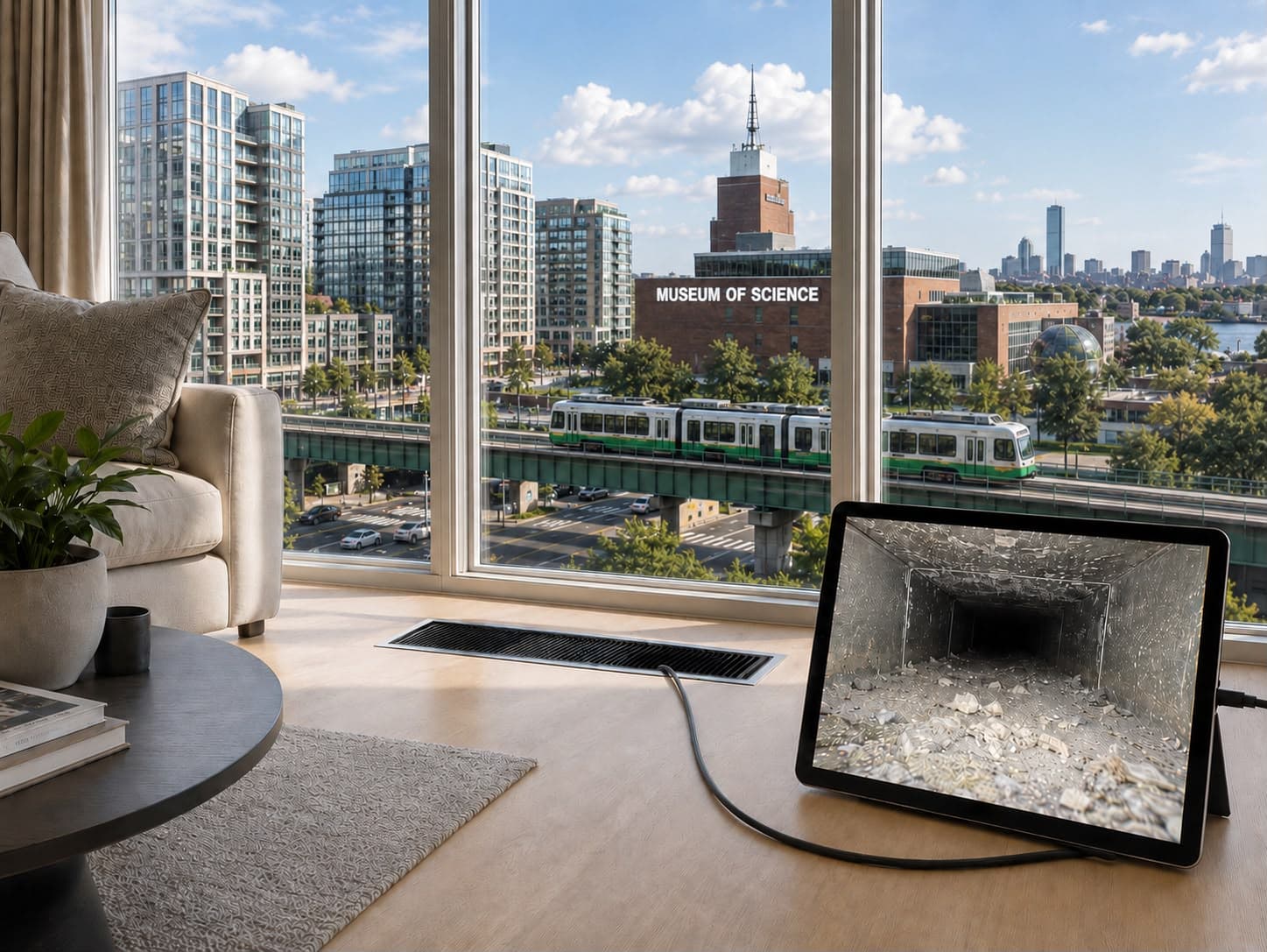
617 HVAC runs a borescope camera through your ductwork and records the condition inside. You watch the live feed with the technician and keep the footage afterward. A video inspection documents dust, debris, moisture and suspect growth before you spend a dollar on cleaning, testing or anything else. Findings and pricing come in writing.
Residential Video Inspection
The $498 all-in price covers mobilization, about one hour of inspection, video documentation, the written summary and a findings review.
Why Look Inside
Most duct problems hide where no one looks. Dust, debris, moisture and growth build up inside the ductwork, out of sight, until a symptom finally appears in the room. By then the guesswork begins and guesswork is how homeowners get sold cleaning they may not need. A video inspection replaces the guess with footage, so every decision that follows rests on what the camera actually shows.
01
Dust that returns days after wiping often traces back to the duct system. A borescope inspection shows if the buildup lives inside the ductwork or somewhere else.
02
A musty smell when the system runs can point to moisture inside the ducts. The camera locates damp sections and any suspect growth that may be contributing to the odor.
03
Renovation dust gets pulled into open returns and settles deep in the runs. A video inspection documents how far the construction debris traveled through the system.
04
A cleaning company profits from cleaning. A video inspection gives you an independent look inside first, so you approve the work based on evidence, not a sales pitch.
What the Inspection Covers
A 617 HVAC video inspection documents the accessible ductwork and the HVAC components a symptom points toward.
The camera travels the accessible supply and return ductwork, recording dust levels, debris and the general condition of each run.
The inspection reaches accessible main trunk lines and the plenum, where debris can collect before it distributes to the rest of the home.
The technician documents registers, grilles and accessible duct sections directly behind them, where staining and buildup first appear.
The camera flags damp sections, water staining and condensation trails, because moisture can turn ordinary dust into a mold concern.
When footage shows growth that looks like mold, the technician documents the location so laboratory testing can confirm it before any cleaning.
You watch the inspection on a live screen and receive the recorded footage, so the evidence stays with you for every decision that follows.
How We Work
A video inspection at 617 HVAC moves through five stages, from your first call to a written summary of what the camera found.
01
Describe the symptom: recurring dust, a musty smell or a recent renovation. We respond within 24 hours and explain the visit.
02
A trained technician opens accessible inspection points at the returns, supplies and plenum without disturbing the ductwork.
03
The technician feeds an articulating borescope camera through the runs. You watch the live feed and see the duct interiors as the camera moves.
04
The camera records dust, debris, moisture, staining and any suspect growth. Each finding is captured on video with its location noted.
05
The technician walks you through the footage and provides a written summary. You decide the next step from documented evidence.
Complete Transparency
The Live Feed
You watch the duct interiors on screen as the camera moves through the system.
The Footage
You keep the recorded video of every accessible run the camera reached.
The Written Summary
Findings and pricing in writing, with the location of each issue noted.
A video inspection ends with footage and a written summary, not a verbal opinion you cannot verify later.
What the Footage Tells You
A video inspection points to one of four next steps and sometimes the answer is that no work is needed at all.
01
The footage shows a healthy system and the honest answer is that no cleaning is needed. You keep your money and you have video documenting the condition.
02
The camera documents heavy dust or debris through the runs. The footage supports ductwork cleaning and you approve it based on what the inspection showed.
03
The footage shows suspect growth or moisture. Mold testing confirms what the camera found before any cleaning, so containment matches the lab result.
04
The inspection rules the ductwork out and points elsewhere, to an air-quality issue or an HVAC fault. You stop paying to chase the wrong cause.
The footage decides the next step and the honest outcome is sometimes no work at all. An inspection that rules a problem out saves you as much as one that finds it.
Camera Evidence
These frames show the kinds of duct conditions a video inspection documents, from accessible clean surfaces to heavy buildup inside the system.
A close camera view records dust and material along surfaces otherwise hidden from the room.
Matching interior angles make surface condition and accumulated material easier to evaluate.
Inspection footage can document conditions throughout a run, including areas near registers and grilles.
A video inspection runs a borescope camera through your duct system to record the condition inside. The technician documents dust, debris, moisture and suspect growth, then reviews the footage with you and provides a written summary.
A cleaning removes buildup; an inspection documents it first. A company that only cleans profits from cleaning. An independent video inspection shows you what is inside before you approve any work, so the decision rests on evidence.
Yes. You watch the live feed on screen as the camera moves through the ducts and you keep the recorded video afterward. The footage stays with you for every decision that follows the inspection.
The camera locates suspect growth and moisture, but it does not confirm mold. A surface sample and accredited lab analysis confirm the species. The inspection documents the location so testing goes to the right spot.
Most residential video inspections take about one hour, depending on the size of the duct system and the number of accessible runs. The technician explains the scope for your home before the work begins.
An inspection first protects you from paying for cleaning you may not need. The footage confirms if the ductwork is dirty enough to justify the work, so you approve cleaning based on documented evidence.
Yes. Older homes, triple-deckers and homes with tight duct access are common across Greater Boston. The borescope camera reaches runs that a visual check from the register cannot see.
You decide the next step from documented findings. Heavy debris points to cleaning, suspect growth points to testing and a clean system means no work at all. The footage and written summary guide the choice.
Swipe to explore
617 HVAC runs the camera, records the condition and puts the findings in writing. Request an estimate or call to schedule your video inspection.